
Weeping fig
Ficus benjamina L. · Family: Moraceae
Warm climates; cannot take frost. Best in partial shade with good light. Any well-drained soil, the richer the better, with plenty of moisture. Not salt tolerant but copes with urban pollution.
Where it grows on Tenerife
Grows in: South coast · North coast · South, 300–1000 m · North, 300–1000 m · Above 1000 m
Zones are derived approximately from the Cabildo belts.
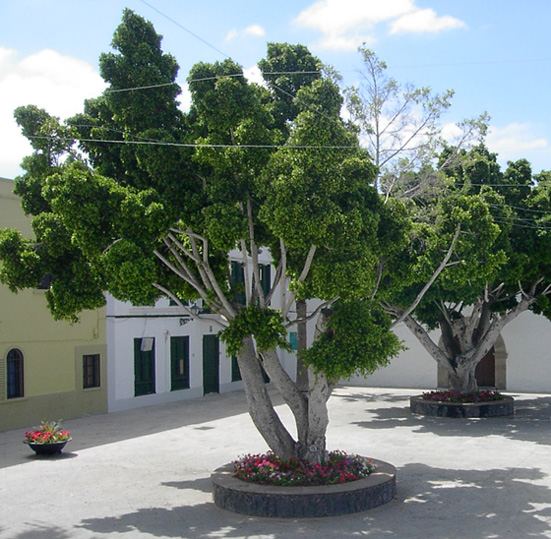
Photos
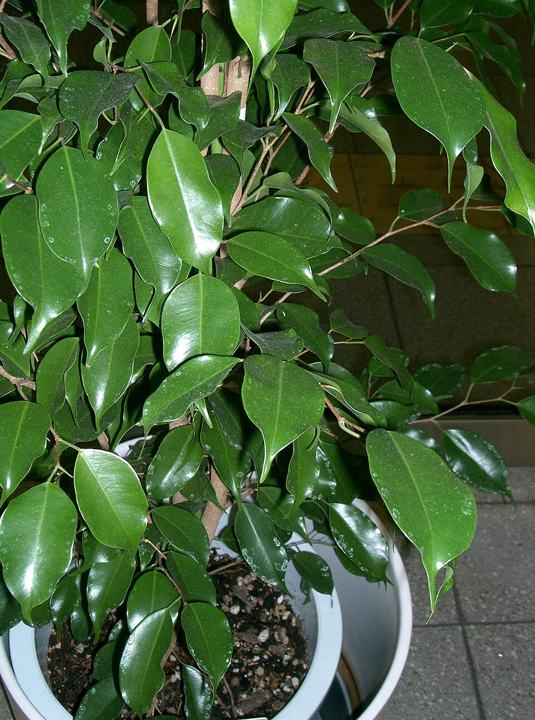
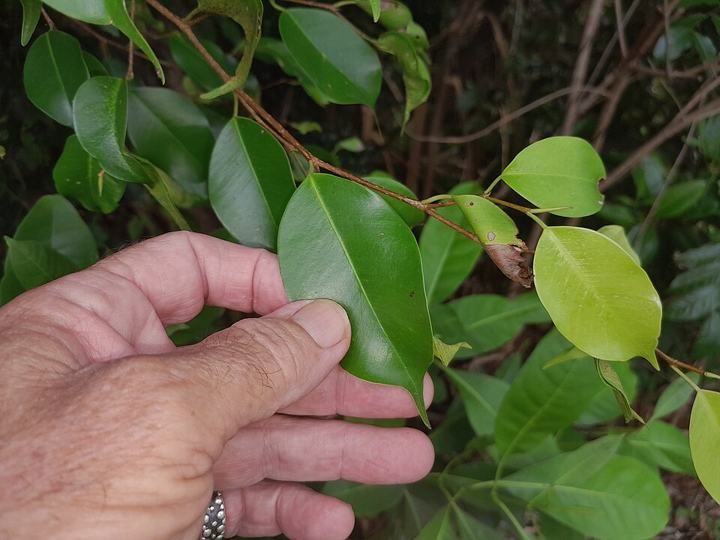
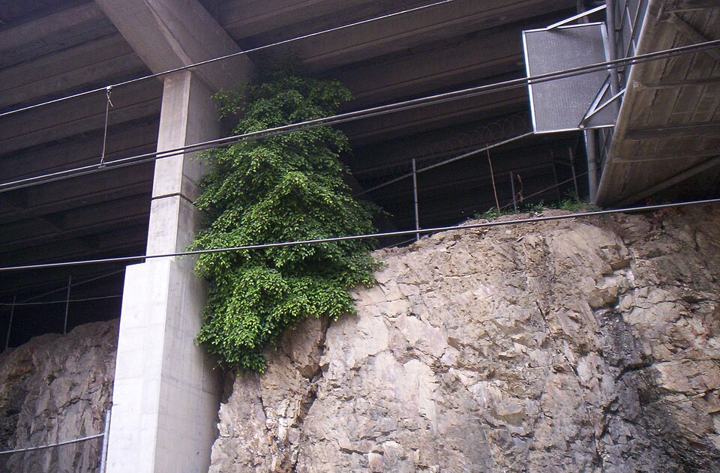
From Wikipedia
Ficus benjamina, commonly known as weeping fig, benjamin fig or ficus tree and often sold in stores as just ficus, is a species of flowering plant in the family Moraceae, native to Asia and Australia. It is the official tree of Bangkok. The species is also naturalized in the West Indies and in the states of Florida and Arizona in the United States. Its small fruit are favored by some birds. Ficus trees have proved to have environmental benefits in urban areas, such as acting as biomonitors. The species is also associated with some allergens.
Text from Wikipedia, CC BY-SA 4.0: Ficus benjamina
Description
An evergreen tree native to India, South-East Asia, China and Australia, with smooth grey bark and a weeping habit; although it rarely exceeds 10 m in cultivation, in the wild it can reach more than twice that. Leaves petiolate, up to 13 cm long, ovate-elliptic, narrowing towards the base, with an acuminate tip and a smooth, hairless, glossy green surface. The venation is faint. Fruits globose, about 1 cm in diameter, reddish when ripe, borne in the leaf axils in pairs. There are numerous cultivars with leaves in different shades.
Propagation and growing
It is propagated by cuttings or rooting. It needs moderate sun exposure and moderate watering. Slow-growing. Propagation by seed, cuttings and layering.
Garden use
With its bright green foliage it suits gardens and squares where it is not too exposed to strong sun; for this reason it is better suited as a houseplant. Low maintenance. It is one of the most popular “Ficus” as a houseplant and also outdoors in pots. Suitable for planting along roads and in parks. It is very sensitive to overwatering and too-frequent watering. A symptom of this is yellowing of the leaves and then leaf drop. It accepts pruning but not clipping. It can be attacked by aphids and scale insects and, if the air is too dry, by red spider mite.
Notes
Like other “Ficus”, it is badly affected by whitefly. Specimens planted in extremely windy and sunny positions grow poorly, as can be seen in various towns and on roundabouts along the Southern Motorway (TF-1).
Source: Cabildo de Tenerife, “Guía de especies vegetales”, CC BY. Translated from Spanish by us.
Bioclimatic belts
Warm coastal belt
- Inframediterranean, hyperarid
- Inframediterranean, arid
- Inframediterranean, semi-arid (lower level)
- Inframediterranean, semi-arid (upper level)
- Inframediterranean, dry, without trade-wind fog
- Inframediterranean, dry, with trade-wind fog
Warm mid-slope belt
- Thermomediterranean, semi-arid (lower level)
- Thermomediterranean, semi-arid (upper level), without trade-wind fog
- Thermomediterranean, semi-arid (upper level), with trade-wind fog
- Thermomediterranean, dry, with trade-wind fog
- Thermomediterranean, dry (lower level), without trade-wind fog
- Thermomediterranean, subhumid, with trade-wind fog
- Thermomediterranean, dry (upper level), without trade-wind fog
- Thermomediterranean, humid, with trade-wind fog
Temperate belt of laurel and pine forest
- Mesomediterranean, lower, semi-arid (upper level), without trade-wind fog