
Leña buena (Neochamaelea)
Neochamaelea pulverulenta (Vent.) Erdtman · Family: Rutaceae
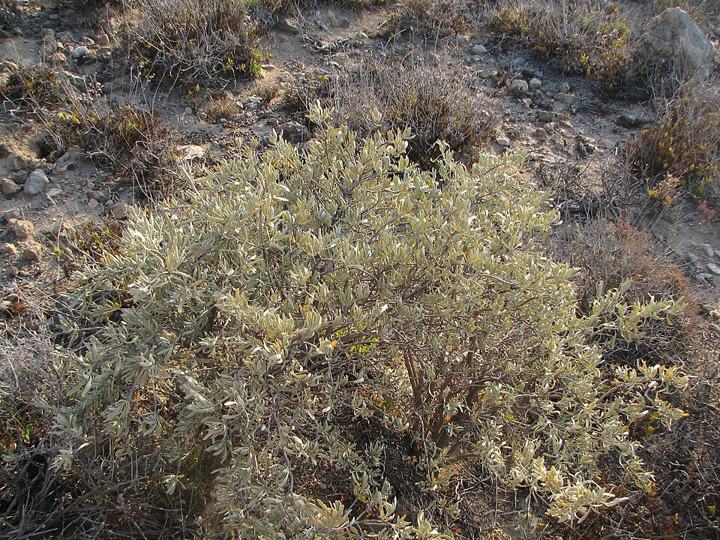
A species of spurge scrub and coastal shrubland below 500 m, sometimes up to 800 m. Likes dry, warm conditions, little water and free-draining soil such as lava fields. Suits a dry garden.
Photos
Description
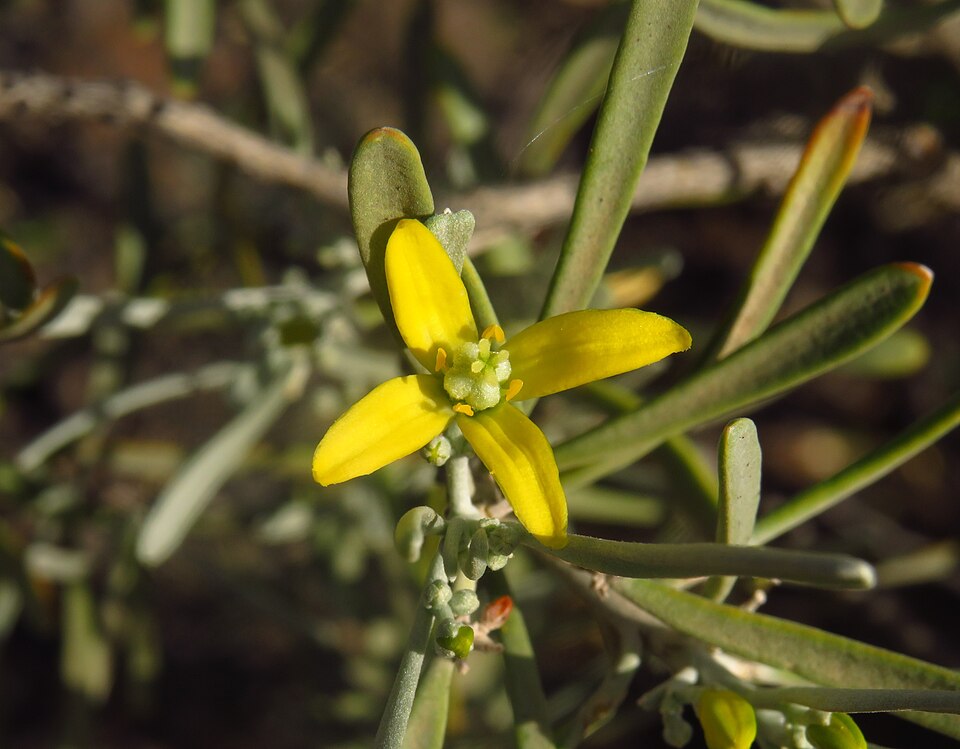
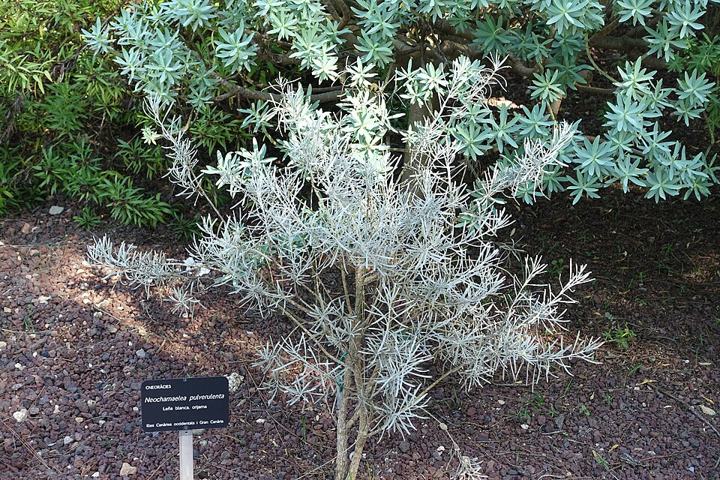
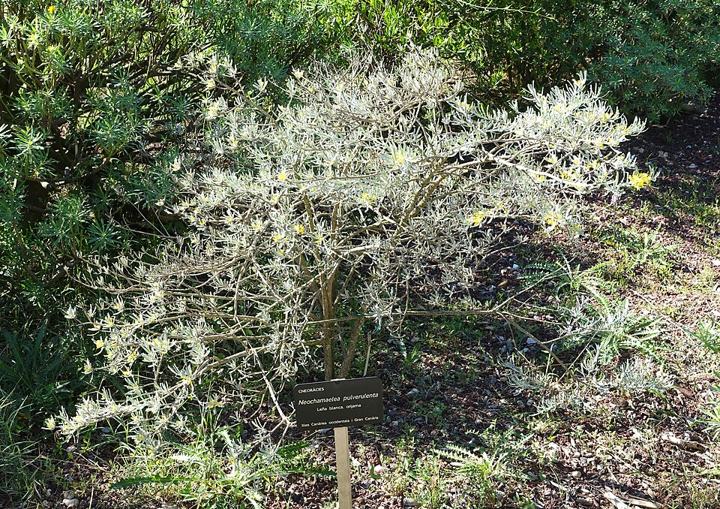
Evergreen shrub with an open habit, up to 2 metres tall, woody and densely branched, with hard yet flexible branches. The bark is greyish and becomes warty with age. The leaves are greyish green, alternate, narrow, linear-lanceolate, densely tomentose and up to 6 cm long. The yellow flowers are clustered in the leaf axils, while the almost spherical fruits are borne in groups of 2-3; they are reddish brown, up to 1 cm in diameter, though their size varies from island to island. The fruit is a drupe made up of 2-4 cocci, each with a single seed.
Propagation and growing
Seed collection takes place from July to September. The time to collect is when the fruits turn a dark greenish colour, by hand-stripping ("milking") them directly from the tree. There are approximately 6,000 seeds per kilo, and processing involves three stages: drying, in which they are put in the sun or in a drying oven until they reach the right moisture level; soaking, in which they are placed in a tank with plenty of water for 24 h; and depulping, in which the pulp is removed from the seed with a blender or mortar mixer. Stored cold (5 ºC), the seed remains viable for at least 3 years. Pre-germination treatment consists of disinfection with fungicides or hydrogen peroxide. Neochamaelea pulverulenta is grown in a seedbed or in polyethylene trays under controlled conditions, in autumn. Ideal conditions are 70-80 % humidity, a temperature of 20-25 ºC and low light. Watering needs are low: keep the soil moist while avoiding waterlogging. Damping-off is prevented and controlled by alternating fungicides. Germination reaches roughly 45 %, and the process takes 12 months: a modest first flush of germination at 20-25 days is followed by a wait of almost 11 months before the germination percentage given above is reached. The seed has a double dormancy, in which a morphological dormancy located in the hard seed coat is combined with a physiological one involving embryo growth inhibitors in the endosperm. The growing-on stage takes place in a shade house or outdoors under the same conditions as above.
Garden use
A species of interest for environmental restoration work, and so far little used. Traditionally it has been used to heal wounds and bruises, relieve pain, lower blood sugar and cholesterol, treat goats' udders, as timber, and to make needles (agujas de barbilla). Phytochemical studies support these properties.
Notes
Its common name "leña buena" ("good firewood") relates to one of its most important uses, especially in the post-war years, to the point that the species was almost wiped out. Going even further back in time, we can say that it formed part of the process of…
Protection status
Annex II of the Order of 20 February 1991 on the protection of wild flora of the Canary Islands.
Potential vegetation
Matorrales zerófilos…
Source: Cabildo de Tenerife, “Guía de especies vegetales”, CC BY. Translated from Spanish by us.
Districts
Daute · Teno · South-west · Abona