
Viñátigo (Persea indica)
Persea indica (L.) C. K. Spreng. · Family: Lauraceae
A characteristic species of the humid laurel forest.
Where it grows on Tenerife
Grows in: North, 300–1000 m · Above 1000 m
Zones are derived approximately from the Cabildo belts.
Photos
From Wikipedia
Persea indica is a large, evergreen tree in the laurel family (Lauraceae), native to humid uplands on Madeira and the Canary Islands in the North Atlantic. It belongs to the genus Persea, a group of evergreen trees including the avocado. It is threatened by habitat loss.
It has been introduced to a number of islands in the nearby Azores.
Text from Wikipedia, CC BY-SA 4.0: Persea indica
Description
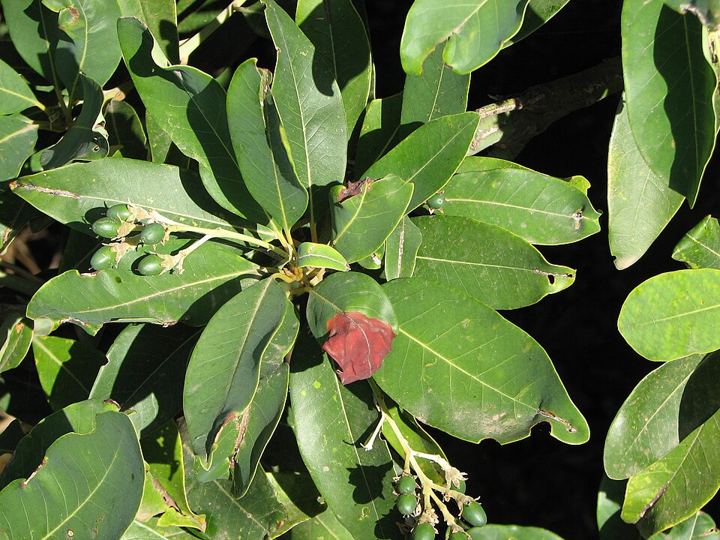
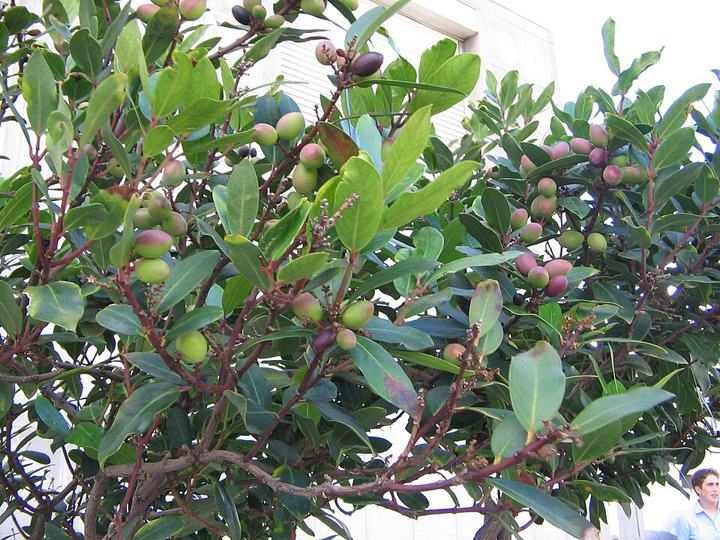
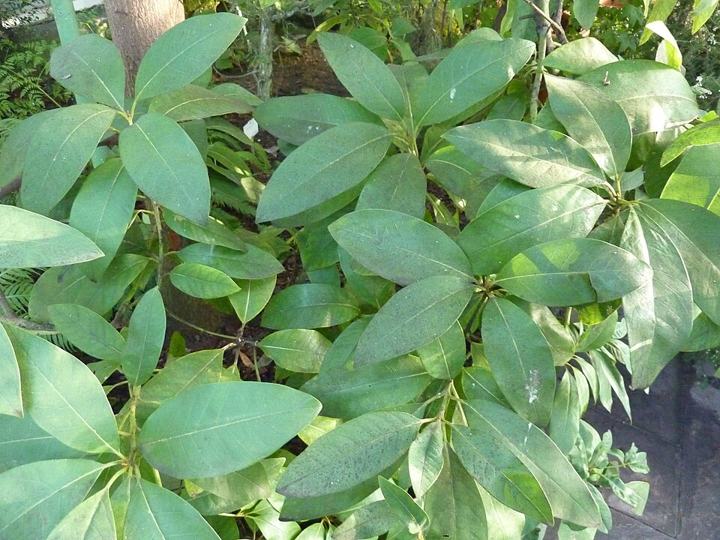
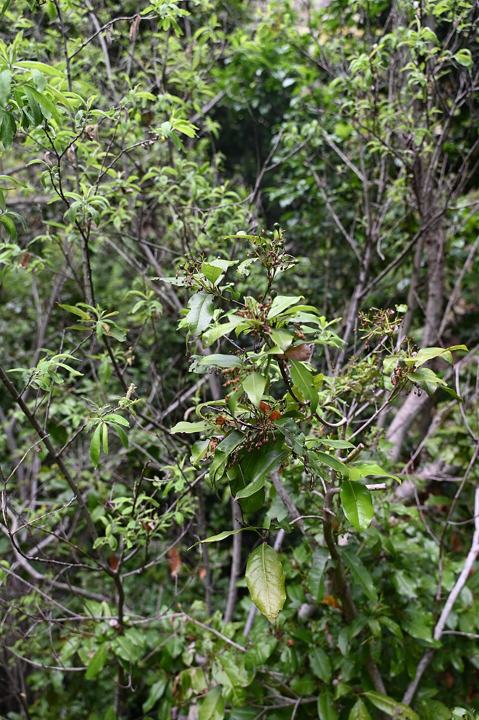
Evergreen tree that can reach 20 m in height, with dark grey, fissured bark. Leaves large (15-18 cm long), oblong-lanceolate, leathery, bright green, turning reddish with age. Flowers small, inconspicuous, greenish-yellow; fruits ovate-elliptic, about 2 cm, blackish. Flowers mainly in spring and summer.
Propagation and growing
Its fruits, the size and shape of an olive, contain a seed that germinates easily without any pre-treatment. The seedling, vigorous and fast-growing, needs a temperate climate, a humid environment, clay-loam soils and a neutral to acid pH (J.C.Delgado, 1986). It copes well with sunny conditions as long as there is plenty of soil moisture; otherwise it is susceptible to thrips and scale insects. Being easy to germinate and grow, it is usually available in native-plant nurseries; nursery cultivation takes about a year, after which the plant can exceed half a metre in height. It needs plenty of moisture and soils rich in organic matter, although it will tolerate less favourable conditions. Not currently available in the Cabildo nurseries.
Garden use
Young specimens of this species are generally more or less conical, becoming umbrella-shaped in adulthood. Its impressive size and habit, together with the beauty and glossiness of its large dark green leaves, which turn red as they age, give it high value as an ornamental tree with dense, multicoloured foliage for squares, gardens, roundabouts, roadsides, etc. It is also considered of high ecological and conservation value in landscape restoration. It needs moderate watering during the dry season for the first two years. It is a good shade species for parks, gardens and avenues. Being a laurel-forest (monteverde) species, it needs particular climatic conditions, such as high relative humidity, and fertile soils. It is evergreen and reaches up to 20 metres, making it ideal as a shade tree. It tolerates occasional pruning, and it is recommended for recreational areas within the laurel-forest zone and for gardens where adequate watering and optimal soil conditions can be guaranteed.
Notes
Also present in the Azores and Madeira. The species is sometimes used as a rootstock for “Persea americana” (avocado).
Protection status
Annex III of the Order of 20 February 1991 on the protection of wild flora of the Canary Islands.
Potential vegetation
Lauro-Perseetum indicae y Diplazio caudati-Ocoteetum foetentis.
Source: Cabildo de Tenerife, “Guía de especies vegetales”, CC BY. Translated from Spanish by us.
Bioclimatic belts
Warm mid-slope belt
- Thermomediterranean, dry, with trade-wind fog
- Thermomediterranean, subhumid, with trade-wind fog
- Thermomediterranean, humid, with trade-wind fog
Temperate belt of laurel and pine forest
- Mesomediterranean, lower, dry, with trade-wind fog
- Mesomediterranean, lower, subhumid, with trade-wind fog
- Mesomediterranean, lower, humid, with trade-wind fog
Districts
Anaga · Metropolitan area (Santa Cruz and La Laguna) · Acentejo · La Orotava Valley · Daute · Güímar Valley