
Espinero (Rhamnus crenulata)
Rhamnus crenulata Aiton · Family: Rhamnaceae
A Canary endemic typical of thermophilous scrub and groves on slopes at 300–600 m and of spurge scrub, often sheltering inside large spurges.
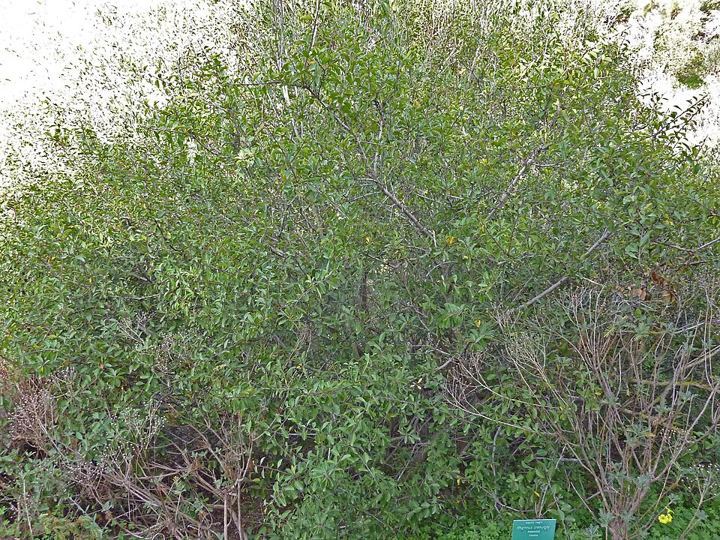
Photos
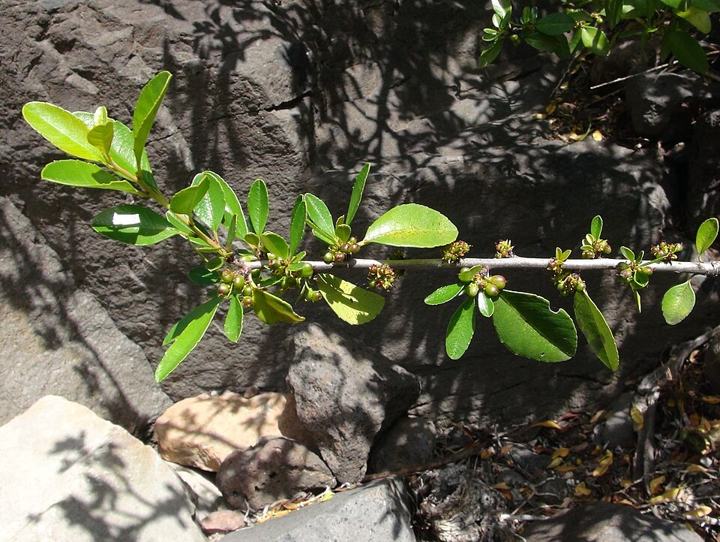
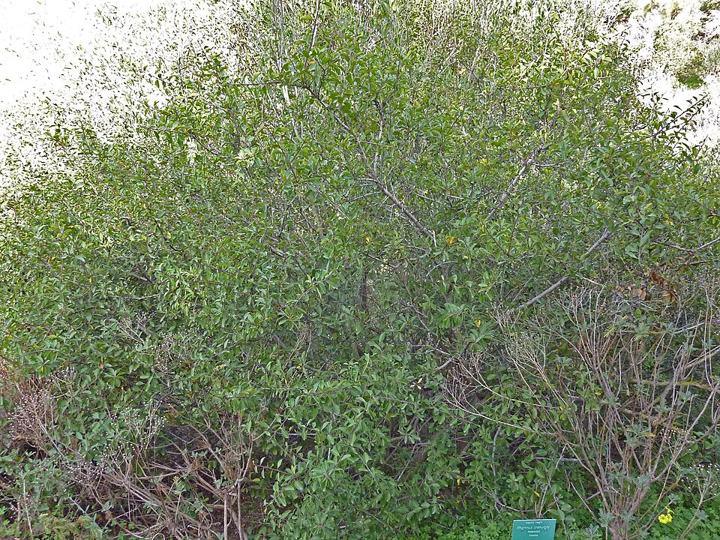
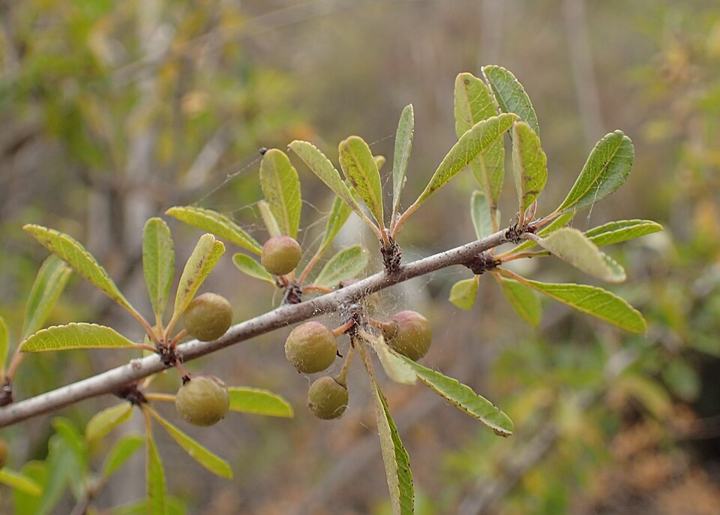
From Wikipedia
Rhamnus crenulata is a species of plant in the family Rhamnaceae. It is endemic to the Canary Islands of Spain. It is threatened by Mediterranean Matorral shrubland habitat loss. In the Canary Islands it is also known as espinero and to the wider community as Canary Buckthorn.
Text from Wikipedia, CC BY-SA 4.0: Rhamnus crenulata
Description
Very woody evergreen shrub, densely branched with hard branches, reaching 2 m tall or even more. Bark greyish brown to brown, becoming fissured with age. Petiole short and reddish. Leaves narrowly oblanceolate to obovate, dark green, without glands and with toothed-crenate margins, up to 2.5 cm long. Short inflorescences with few axillary flowers, small but plentiful, bright green. The fruits are spherical, fleshy drupes, green at first and purple when ripe, with three seeds that are green at first and reddish when ripe.
Propagation and growing
Seed collection takes place from June to August. The time to collect is when the fruits change colour from red to blackish, by hand-stripping ("milking") them directly from the tree, or from the ground once already clean. There are approximately 138,500 seeds per kilo, and processing involves four stages: drying, in which the fruits are placed in the shade until they ripen; soaking, to soften the fleshy part of the fruit; depulping, in which the seed is separated from the rest with a blender; and washing and drying, to leave the seed free of residue. In storage at room temperature the seed keeps its germination capacity for at least 3 years. Pre-germination treatment consists of disinfection with fungicides or hydrogen peroxide. Rhamnus crenulata is grown in a seedbed or in polyethylene trays under controlled conditions, from September to November. Ideal conditions are 70-80 % humidity, a temperature of 20-25 ºC and low light. Watering needs are low: keep the soil moist while avoiding waterlogging. Damping-off is prevented and controlled by alternating fungicides. Germination occurs 15-20 days after sowing, at rates of approx. 45 %. The growing-on stage takes place in a shade house or outdoors under the same conditions as above.
Garden use
Of interest as a shrub species for reforestation work. It is used in environmental restoration work. It is considered to have ornamental value for hedging and screens. The fruits contain substances that dye yellow and can be used in traditional natural dyeing. Its medicinal qualities stand out for relieving stomach complaints, taken orally as an infusion made by boiling the fruits. This species needs little maintenance, just long hours of light, average temperatures of around 18 ºC, medium-low water requirements and a stony, slightly moist substrate.
Notes
The best-known part of "leña negra" is its fruit. On the one hand, when boiled, it is credited with astringent and purgative properties. But a natural yellow dye was also extracted from it. Today it is a species of some value…
Protection status
Not listed.
Potential vegetation
Matorrales de medianías asociados al bosque termófilo y a la parte superior del cardonal.
Source: Cabildo de Tenerife, “Guía de especies vegetales”, CC BY. Translated from Spanish by us.
Districts
Anaga · Metropolitan area (Santa Cruz and La Laguna) · Acentejo · La Orotava Valley · Daute · Teno · South-west · Abona · South-east · Güímar Valley