
Canary sow-thistle
Sonchus canariensis (Sch. Bip.) Boulos · Family: Asteraceae
Dry sunny slopes and cliffs, in scrub at 300–600 m and above.
Where it grows on Tenerife
Grows in: South coast · North coast · South, 300–1000 m · Above 1000 m
Zones are derived approximately from the Cabildo belts.
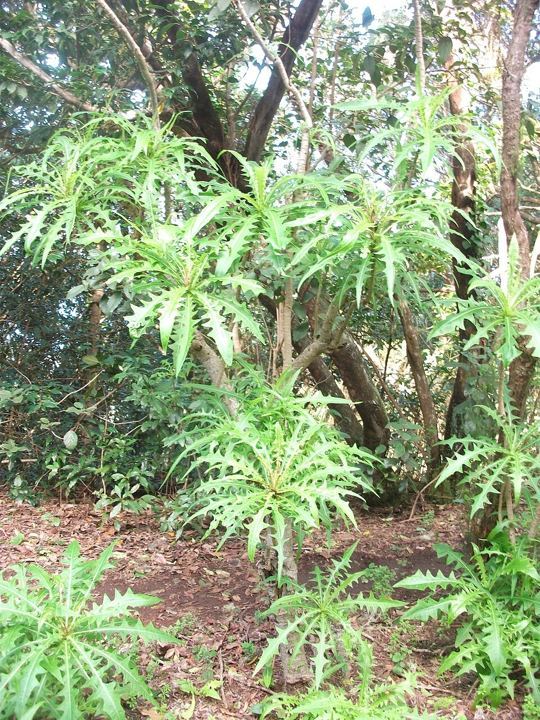
Photos
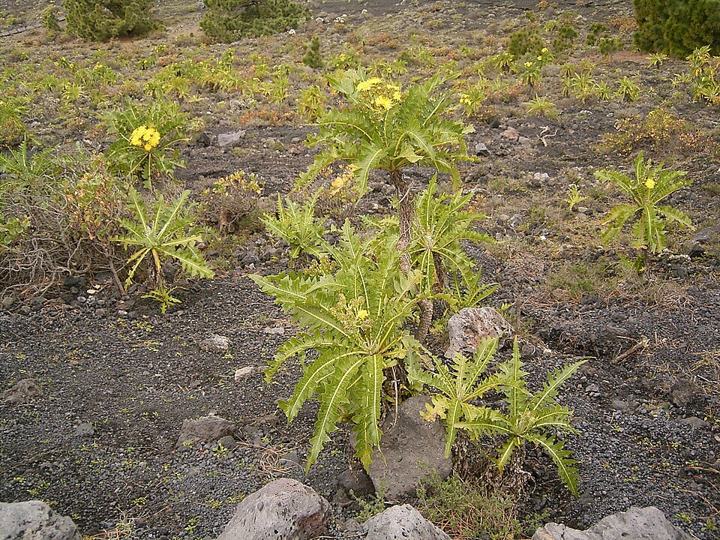
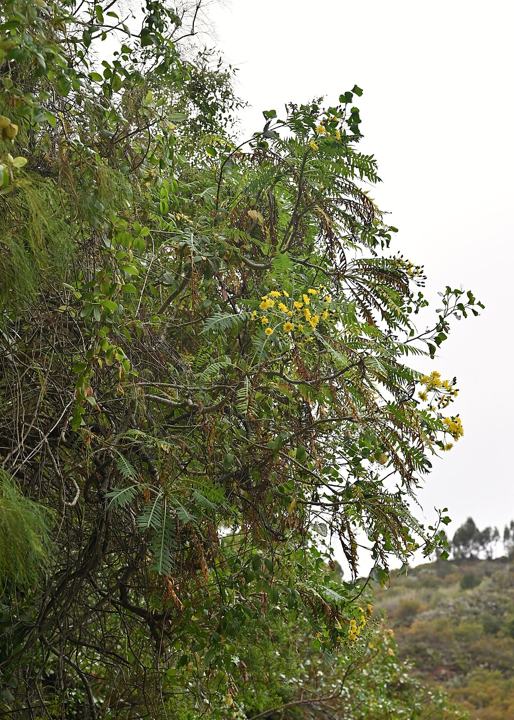
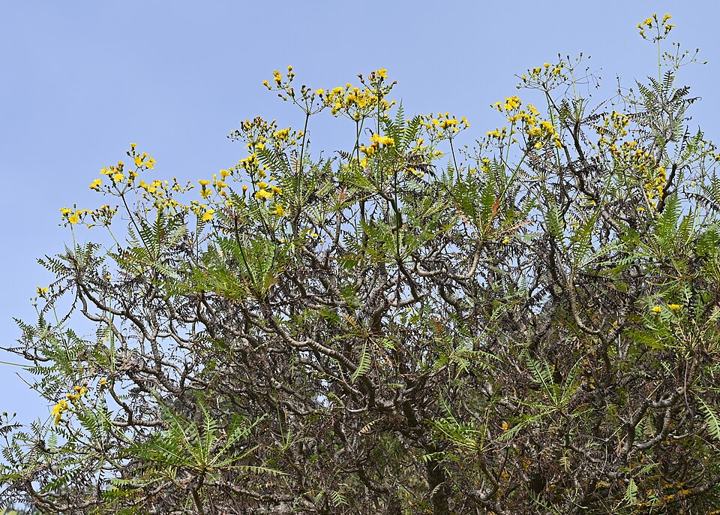
From Wikipedia
Sonchus canariensis, the tree sonchus, is a species of plant endemic to the Canary Islands.
Text from Wikipedia, CC BY-SA 4.0: Sonchus canariensis
Description
Shrub up to 3 m tall, with a slender trunk that branches early and slender, semi-woody, brittle branches. Leaves in subterminal rosettes, 25–30 cm long, lanceolate and divided into 10–15 pairs of slightly serrated lobes up to 3.5 cm long. Inflorescence terminal and branched, with many heads of yellow flowers up to 1.5 cm across. Flowers in spring.
Propagation and growing
The fruits of the cerraja are small achenes, easy to collect and bearing a pappus of white hairs that helps wind dispersal; the seed inside germinates easily and quickly, giving vigorous plants that grow fast and are easy to cultivate; after one year they exceed half a metre in height. Although already used in island gardens, it is not usually available in native-plant nurseries and growing it to order must be arranged at least a year in advance.
Garden use
This large shrub, which can exceed three metres in height, has a thick trunk branching heavily and irregularly from the base. It flowers from March to May and, like the other species in the genus, the flowers are yellow and eye-catching. It is a species of great ornamental value, as its presence in island gardens shows; very hardy, it adapts well to different environments except coastal areas very close to the sea, where salt spray can harm its development. It can thrive across a very wide altitudinal range (200–1,500 m above sea level) but does not tolerate very low temperatures or frost. It needs no special maintenance, but dead leaves should be removed from time to time; it can be transplanted, but only with specific measures to avoid damaging the root ball, and it is drought-resistant. Little used so far, it is a very interesting species for all kinds of landscaping. Ideal for roundabouts, parks and gardens in general; it can be planted as single specimens or in groups, like palm groves.
Notes
In addition to the typical subspecies, subsp. "orotavensis" Boulos has been described.
Protection status
Annex II of the Order of 20 February 1991 on the protection of wild flora of the Canary Islands.
Potential vegetation
Periploco-Euphorbietum canariensis; Sideritido-Pinetum canariensis.
Source: Cabildo de Tenerife, “Guía de especies vegetales”, CC BY. Translated from Spanish by us.
Bioclimatic belts
Warm coastal belt
- Inframediterranean, semi-arid (lower level)
Warm mid-slope belt
- Thermomediterranean, dry (upper level), without trade-wind fog
Temperate belt of laurel and pine forest
- Mesomediterranean, lower, dry, without trade-wind fog
- Mesomediterranean, upper, dry, without trade-wind fog
Districts
La Orotava Valley · Daute · Teno · South-west